Cloud Computing Training In Bangalore 100% Job Guarantee

  • Given by a certified cloud computing expert with over ten years of experience.
  • 320+ Employing Clients and 11402+ Students Trained.
  • The Best Nominal Cost Approaches to Trending Concepts.
  • Reasonably priced fees and a curriculum created by industry experts.
  • The Next Batch of Cloud Computing Will Start This Week; Register Your Name Now!

Explore the factors that draw more than 25,000 students to ACTE.

Curriculum in Cloud Computing

Linux Fundamentals
  • Automating Programs
  • Login Options
  • Key Filesystem Locations
  • BASH – Borne Again Shell
  • User Management
  • The /proc Pseudo Filesystem
  • Software Management
  • Hardware Management
  • Network Management
  • The X Window System
  • Building a Custom Linux Kernel
  • Kernel Versions
  • Kernel Source Files
  • Kernel Patch Files
  • Kernel Configuration
  • Kernel Building
  • Testing a New Kernel
  • The GNU/Linux Filesystem
  • Partition Types
  • Filesystem Types
  • Mounting
  • Automount
  • File Types
  • File Security
  • AWS (Amazon Web Services)
  • Introduction to AWS
  • EC2
  • Storage
  • Route 53
  • Cloud Front/Content Delivery Network
  • IAM
  • Relational Database Service
  • Monitoring (Cloud Trail & Cloud Watch)
  • Application Services
  • Design and Architecture
  • Virtual Private Cloud
  • VPC
  • Subnets
  • Route Tables
  • Internet gateway
  • Load Balancing and Autoscaling
  • Classic Load balancer
  • Application Load balancer
  • Network Load balancer
  • DynamoDB
  • Scaling through performance
  • Server less environment
  • Microservices
  • Introduction to DevOps
  • DevOps Principles in detail
  • DevOps Engineer Skills in the market
  • Knowing DevOps Delivery Pipeline
  • The market trend of DevOps
  • DevOps Technical Challenges
  • Tools we use in DevOps
  • DevOps on Cloud
  • Essentials of Cloud computing?
  • Cloud and virtualization architecture
  • Cloud deployment architecture
  • Cloud providers – An overview
  • Why we need DevOps on Cloud?
  • Introducing to Amazon web services
  • Jenkins – Continuous integration
  • Essentials of Continuous Integration
  • An example scenario where CI is used
  • Know about Jenkins and its architecture in detail
  • Jenkins tool Management in detail
  • Know about User management in Jenkins
  • Adding a slave node to Jenkins
  • Building Delivery Pipeline
  • Notification settings in Jenkins
  • Plugin management in Jenkins
  • Docker – A containerization technology
  • Introduction
  • Working with container
  • Introduction to Docker Networking
  • Docker Swarm – An introduction
  • Kubernetes
  • Introduction to Kubernetes
  • Kubernetes Cluster Architecture – An overview
  • Understanding concepts of Pods, Replica sets, deployments and namespaces
  • Understanding the concepts of services and networking
  • Persistent volumes and persistent volume claims – an overview
  • Design of Pods
  • Microsoft Azure
  • Introduction to Cloud Computing
  • Introduction to Azure
  • Configuration Management, Automation, and Debugging
  • Commands
  • Networking in Azure
  • Scaling in Azure
  • Monitoring in Azure
  • High Availability
  • Azure AD
  • Azure Service Bus Messaging
  • Azure Key Vaults
  • Web & Mobile Services
  • Azure VMs and Storage Accounts
  • VM Architecture
  • Deploy VMs
  • Create Storage Accounts for VMs
  • Create a VM with Unmanaged Storage
  • Manage VM Disks
  • Configure Shared Storage
  • Clean Up
  • Supported Workloads
  • Create a VM and Storage Account in Azure
  • Azure CLI
  • Azure PowerShell
  • Azure Cloud Shell
  • VM Agent and Extensions
  • ARM Templates
  • PowerShell DSC
  • Deploy and Enable Debugging for VM in Dev
  • Terraform Modules
  • Introduction to Modules
  • Module repositories
  • First Basic Module
  • The Module codes
  • Main Terraform Code
  • Using git repositories to save modules
  • Terraform With AWS
  • Setting up the system for AWS
  • AWS Storage: The S3 Bucket and Random ID
  • AWS Storage: The Root Module
  • AWS Compute: AMI Data, Key Pair, and the File Function
  • AWS Compute: The EC2 Instance
  • AWS Compute: User Data and Template Files
  • AWS Compute: The Root Module
  • AWS Networking: VPC, IGW, and Route Tables
  • AWS Networking: Subnets, Security, and the Count Attribute
  • AWS Networking: The Root Module
  • Curriculum in Cloud Computing

    Cloud Computing Is Preferred by Over 35% of Developers. Cloud Computing is the most widely used and in-demand programming language in the IT industry.

    • Automating Programs
    • Login Options
    • Key Filesystem Locations
    • BASH – Borne Again Shell
    • User Management
    • The /proc Pseudo Filesystem
    • Software Management
    • Hardware Management
    • Network Management
    • The X Window System
    • Kernel Versions
    • Kernel Source Files
    • Kernel Patch Files
    • Kernel Configuration
    • Kernel Building
    • Testing a New Kernel
    • Partition Types
    • Filesystem Types
    • Mounting
    • Automount
    • File Types
    • File Security
    • Introduction to AWS
    • EC2
    • Storage
    • Route 53
    • Cloud Front/Content Delivery Network
    • IAM
    • Relational Database Service
    • Monitoring (Cloud Trail & Cloud Watch)
    • Application Services
    • Design and Architecture
    • VPC
    • Subnets
    • Route Tables
    • Internet gateway
    • Classic Load balancer
    • Application Load balancer
    • Network Load balancer
    • Scaling through performance
    • Server less environment
    • Microservices
    • DevOps Principles in detail
    • DevOps Engineer Skills in the market
    • Knowing DevOps Delivery Pipeline
    • The market trend of DevOps
    • DevOps Technical Challenges
    • Tools we use in DevOps
    • Essentials of Cloud computing?
    • Cloud and virtualization architecture
    • Cloud deployment architecture
    • Cloud providers – An overview
    • Why we need DevOps on Cloud?
    • Introducing to Amazon web services
    • Essentials of Continuous Integration
    • An example scenario where CI is used
    • Know about Jenkins and its architecture in detail
    • Jenkins tool Management in detail
    • Know about User management in Jenkins
    • Adding a slave node to Jenkins
    • Building Delivery Pipeline
    • Notification settings in Jenkins
    • Plugin management in Jenkins
    • Introduction
    • Working with container
    • Introduction to Docker Networking
    • Docker Swarm – An introduction
    • Introduction to Kubernetes
    • Kubernetes Cluster Architecture – An overview
    • Understanding concepts of Pods, Replica sets, deployments and namespaces
    • Understanding the concepts of services and networking
    • Persistent volumes and persistent volume claims – an overview
    • Design of Pods
    • Introduction to Cloud Computing
    • Introduction to Azure
    • Configuration Management, Automation, and Debugging
    • Commands
    • Networking in Azure
    • Scaling in Azure
    • Monitoring in Azure
    • High Availability
    • Azure AD
    • Azure Service Bus Messaging
    • Azure Key Vaults
    • Web & Mobile Services
    • VM Architecture
    • Deploy VMs
    • Create Storage Accounts for VMs
    • Create a VM with Unmanaged Storage
    • Manage VM Disks
    • Configure Shared Storage
    • Clean Up
    • Supported Workloads
    • Azure CLI
    • Azure PowerShell
    • Azure Cloud Shell
    • VM Agent and Extensions
    • ARM Templates
    • PowerShell DSC
    • Deploy and Enable Debugging for VM in Dev
    • Introduction to Modules
    • Module repositories
    • First Basic Module
    • The Module codes
    • Main Terraform Code
    • Using git repositories to save modules
    • Setting up the system for AWS
    • AWS Storage: The S3 Bucket and Random ID
    • AWS Storage: The Root Module
    • AWS Compute: AMI Data, Key Pair, and the File Function
    • AWS Compute: The EC2 Instance
    • AWS Compute: User Data and Template Files
    • AWS Compute: The Root Module
    • AWS Networking: VPC, IGW, and Route Tables
    • AWS Networking: Subnets, Security, and the Count Attribute
    • AWS Networking: The Root Module

    Cloud Computing Training Projects

    Develop Your Cloud Computing Skills With Useful and Interesting Projects.


    Static Site Generator

    Build a static site generator using serverless technologies like AWS Lambda and AWS S3.


    Basic Content Management System

    Create a simple content management system using AWS DynamoDB for data storage.


    Serverless URL Shortener

    Develop a serverless URL shortening service using AWS Lambda and DynamoDB.


    Content Delivery Network (CDN) Setup

    Set up a CDN for content delivery using services like Amazon CloudFront or Google Cloud CDN.


    Automated Infrastructure Provisioning

    Implement infrastructure as code using tools like Terraform or AWS CloudFormation for automated provisioning.


    Hybrid Cloud Deployment

    Deploy applications across hybrid cloud environments using tools like AWS Outposts or Azure Arc.


    Serverless Voice Assistant

    Build a serverless voice assistant application using cloud-based speech recognition and natural language processing services.


    Quantum Computing Experimentation

    Experiment with quantum computing algorithms and simulations using cloud-based quantum computing services like AWS Braket or IBM Quantum.


    Autonomous Drone Fleet Management

    Design and implement a cloud-based autonomous drone fleet management system for mission planning, navigation, and monitoring.

    Key Highlights

    Our Instructor

    Get advice from specialists who have certifications and are currently working.

    Cloud Computing Training Overview

    Cloud computing is a paradigm-shifting technology that completely changes how individuals and companies use the internet to access, store, and manage data, apps, and services. The fundamental function of cloud computing is to offer shared computing resources, such as servers, storage, networking, and software, as a service that can be accessed anytime, anywhere. Organizations may now dynamically scale resources, pay for what they use, and delegate infrastructure administration to cloud providers thanks to the move to cloud-based infrastructure. Increased flexibility, agility, and teamwork are fostered by cloud computing, which allows users to access their data and apps from any location with internet access.

    Additional Information

    Who Would Benefit From the Cloud Computing Course ?

    • IT professionals looking to upgrade their skills and stay current with the latest technologies can benefit from a cloud computing course. Whether they are system administrators, network engineers, or software developers, learning about cloud computing can help them enhance their expertise and advance their careers.
    • Software developers interested in building cloud-native applications and leveraging cloud services can benefit from a cloud computing course. They can learn about cloud platforms, development tools, and best practices for designing, deploying, and managing applications in the cloud.
    • System administrators responsible for managing IT infrastructure can benefit from a cloud computing course to learn about cloud-based solutions for virtualization, storage, networking, and security. They can acquire skills in deploying and managing cloud infrastructure and services, such as virtual machines, containers, and databases.
    • Network engineers seeking to understand the networking principles and protocols used in cloud environments can benefit from a cloud computing course. They can learn about cloud networking concepts, such as virtual private clouds (VPCs), subnets, and load balancers, and gain hands-on experience in configuring and managing cloud networking resources.

    Why Should You Think About Learning the Programming Language Cloud Computing ?

    • Cloud computing is a rapidly growing field with increasing demand for professionals who can develop and deploy applications in cloud environments. Learning a programming language for cloud computing can open up a wide range of career opportunities in roles such as cloud developer, cloud architect, DevOps engineer, and cloud consultant.
    • Learning a programming language for cloud computing can enhance your skills as a developer and make you more versatile in the IT industry. You'll gain expertise in building and deploying applications on cloud platforms, working with cloud-native services, and leveraging cloud technologies to solve complex business problems.
    • Cloud computing offers scalability and flexibility that traditional on-premises infrastructure cannot match. By learning a programming language for cloud computing, you can leverage cloud platforms' scalability and flexibility to build and deploy applications that can scale dynamically to meet changing demand and adapt to evolving business requirements.
    • Cloud computing can be more cost-effective than traditional IT infrastructure, especially for startups and small businesses. By learning a programming language for cloud computing, you can take advantage of cloud platforms' pay-as-you-go pricing models, which allow you to pay only for the resources you use and avoid upfront capital expenditures on hardware and infrastructure.

    Benefits and Cloud Computing Learning Tips

    Learning cloud computing offers numerous benefits and can significantly enhance your career prospects in the rapidly evolving IT industry. Here are some key benefits of learning cloud computing along with some tips to make the learning process more effective:

    • Cloud computing skills are in high demand across industries, making it easier to land lucrative job roles as a cloud architect, cloud developer, cloud administrator, or DevOps engineer.
    • Cloud computing allows businesses to scale resources up or down as needed, providing greater flexibility and cost efficiency compared to traditional on-premises infrastructure.
    • With cloud computing, applications and data can be accessed from anywhere with an internet connection, enabling remote work and collaboration across geographies.
    • Cloud computing enables rapid innovation by providing access to cutting-edge technologies such as AI, machine learning, and IoT, allowing businesses to stay ahead of the competition.

    Roles and Responsibilities of Cloud Computing

      Cloud computing encompasses various roles and responsibilities crucial for its efficient functioning. At its core, cloud service providers (CSPs) manage the infrastructure, ensuring scalability, reliability, and security. Their responsibilities include maintaining data centers, hardware, and networking components. Additionally, CSPs offer services like Infrastructure as a Service (IaaS), Platform as a Service (PaaS), and Software as a Service (SaaS), each with specific roles. Users, on the other hand, leverage cloud resources for diverse purposes, from hosting applications to storing data, and are responsible for configuring, managing, and securing their environments within the cloud framework.

    Show More

    Enter details. Get MNC calls!

    Cloud Computing Training Objectives

    Completing a Cloud Computing Course Certification can indeed increase your earning potential. Certified professionals often command higher salaries compared to non-certified individuals due to their validated expertise in cloud technologies. Employers value certifications as they demonstrate a commitment to learning and proficiency in relevant skills, which can translate into better job opportunities and higher compensation packages.

    The skill set required to attain certification in Cloud Computing typically includes proficiency in cloud platforms and services like AWS, Azure, or Google Cloud, understanding of cloud deployment models (public, private, hybrid), knowledge of cloud security best practices, expertise in cloud migration and management, familiarity with DevOps practices and tools for automation and continuous integration/continuous deployment (CI/CD), and the ability to design scalable and resilient cloud architectures.

    Cloud Computing certification is important for several reasons. It validates your expertise and proficiency in cloud technologies, making you more marketable to employers seeking professionals with cloud computing skills. Certification demonstrates your commitment to continuous learning and professional development, enhances your credibility and confidence in your abilities, and provides recognition from peers and employers in the IT industry.

  • Cloud architects
  • Cloud engineers
  • Cloud administrators
  • DevOps engineers
  • Cybersecurity specialists focusing on cloud security
  • IT managers overseeing cloud migration and operations
  • Yes, you can expect a salary increase if you obtain your Cloud Computing certification. Certified professionals typically earn higher salaries than their non-certified counterparts due to their validated expertise and skills in cloud technologies. However, the exact salary increase may vary depending on factors such as your level of experience, the specific certification obtained, demand for cloud skills in your geographic location, and the industry you work in.

    Yes, many certification tests for Cloud Computing can be taken online. Providers often offer online proctored exams, allowing candidates to take the test from their own homes or offices while being monitored remotely to ensure exam integrity. This flexibility makes it convenient for individuals to schedule and take certification exams without the need to travel to a testing center.

    Show More

    Industry Statistics

    Jobs / Month

    248

    Avg. Salary

    ₹ 12,55,200

    Job Roles

    Cloud Support Engineer

    Cloud Solutions Architect

    Systems Administrator

    DevOps Engineer

    Cloud Computing Certification

    Certificate
    GET A SAMPLE CERTIFICATE

    Cloud Computing certifications offer several benefits, including validating your expertise and proficiency in cloud technologies, increasing your credibility and marketability to employers, opening up job opportunities and career advancement prospects, potentially leading to higher salaries, providing recognition and respect from peers and industry professionals, and allowing you to stay updated with the latest trends and best practices in cloud computing.

    Yes, there are various categories of Cloud Computing certifications offered by different providers such as Amazon Web Services (AWS), Microsoft Azure, Google Cloud Platform (GCP), CompTIA, and others. These certifications cater to different roles, expertise levels, and cloud platforms, allowing individuals to specialize in specific areas of cloud computing based on their career goals and interests.

    While having a Cloud Computing certification can significantly improve your chances of finding a job in the field, it does not guarantee job placement. However, certification enhances your resume, demonstrates your proficiency in cloud technologies to employers, and makes you more competitive in the job market, increasing your likelihood of securing employment.

    Yes, it is permissible to pursue multiple Cloud Computing course certifications to broaden your knowledge and skills across different cloud platforms and services. Many professionals opt to obtain certifications from multiple providers to showcase versatility and proficiency in various cloud environments, which can enhance their career opportunities and earning potential.

    With a Cloud Computing certification, various career prospects become available, including roles such as cloud architect, cloud engineer, cloud administrator, DevOps engineer, cloud security specialist, and IT manager overseeing cloud migration and operations. These roles involve designing, implementing, managing, and securing cloud infrastructure and services for organizations across different industries.

    Yes, many Cloud Computing certification exams offer remote options that allow candidates to take the exam from their own homes or offices. Online proctored exams are often available, where candidates are monitored remotely to ensure exam integrity.

    While real-world experience can be beneficial for preparing for an Cloud Computing certification exam, it is not always a requirement. Many certification programs provide comprehensive training materials and resources to help candidates prepare for the exam, regardless of their level of experience. However, hands-on experience with cloud platforms and services can enhance your understanding of key concepts and make it easier to grasp complex topics covered in the exam.

    Whether the expenditure of time and finances in acquiring an ACTE Cloud Computing Certification is justified depends on various factors such as your career goals, the specific certification program offered by ACTE, its alignment with your interests and aspirations, the reputation of the certification provider, and the demand for certified professionals in the job market. It's essential to research the certification program thoroughly and assess its value before making a decision.

    Show More

    The Preferred Partner for 100+ Organizations' Hiring

    Learn from the certified and real time working professionals.

    • Over 100 firms that are looking for top talent for their open positions have come to rely on ACTE as their go-to partner.

    • Businesses have confidence in our ability to match them with the best individuals because of our considerable expertise and proven track record of success.

    • In this section, we'll examine the primary elements influencing this trust and examine how our constant commitment to excellence regularly results in remarkable results for our clients.

    Corporate Clients

    Cloud Computing Course Duration and Fees

    Level Course Duration Fees Structure
    Basic 1 - 1.5 Months ₹7,000 - ₹9,000
    Advanced 1.5 - 2 Months ₹7,000 - ₹10,000

    Job Opportunities in Cloud Computing

    Cloud Computing is preferred by more than 35% of developers. The most widely used and in-demand programming language in the tech industry is Cloud Computing.

    Salary In Cloud Computing
    Reach Our Placement Officer

    You can Work as a

    Cloud Operations ManagerCloud Data EngineerCloud ConsultantCloud Software EngineerCloud Project ManagerCloud Compliance AnalystCloud Sales Engineer

    Upcoming In-Demand Jobs

    Cloud Business AnalystCloud Product ManagerCloud Training SpecialistCloud Account ManagerSolutions Developer

    Student Testimonials

    100% Placement

    7000+ Placed Student

    600+ Hiring Partners

    5.5 LPA Average Salary

    Recently Placed Students

    Cloud Computing Training FAQ's

    Boost Your Coding Ability: Essential Cloud Computing Training for Novices and Experienced

  • Cloud computing is becoming increasingly prevalent in businesses of all sizes and industries, making it essential for professionals to have expertise in this area to remain competitive in the job market.
  • Proper training ensures that individuals understand the fundamental concepts, best practices, and tools associated with cloud computing, enabling them to leverage cloud technologies effectively to drive innovation, efficiency, and scalability within their organizations.
  • Cloud computing offers various benefits, including cost savings, flexibility, scalability, and enhanced collaboration, but realizing these benefits requires a skilled workforce capable of harnessing the full potential of cloud platforms and services.
  • While prior programming experience can be beneficial for certain roles or advanced topics within cloud computing, it is not always required for Cloud Computing training. Many introductory Cloud Computing courses are designed for individuals with diverse backgrounds and skill levels, including those with limited or no programming experience. These courses typically start with foundational concepts and gradually introduce more advanced topics, allowing learners to build their skills progressively.

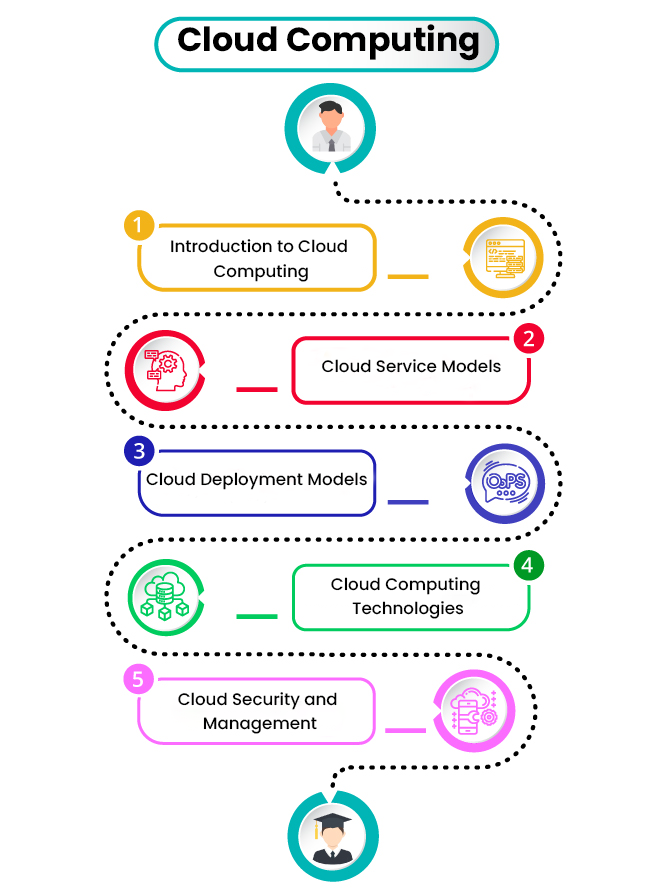
  • Introduction to cloud computing
  • Cloud service models
  • Cloud deployment models
  • Cloud infrastructure and architecture
  • Cloud security
  • Cloud management and optimization
  • The typical length of a Cloud Computing training course can vary depending on factors such as the depth and breadth of the curriculum, the level of customization, and the intended audience. Introductory courses may range from a few days to a few weeks, while more comprehensive or specialized courses may span several weeks or months. Some training programs also offer flexible scheduling options, such as part-time or self-paced learning, to accommodate learners' diverse needs and schedules.

  • Basic computer literacy and familiarity with operating systems and software applications.
  • A general understanding of networking concepts and internet technologies.
  • Depending on the course, certain prerequisites or recommended background knowledge may be specified, such as programming skills, prior experience with cloud computing platforms, or specific educational qualifications.

    Yes, many Cloud Computing training courses offer certifications upon completion. These certifications validate your knowledge and skills in cloud computing concepts, technologies, and best practices, and they can enhance your credibility and marketability to potential employers. Certification exams typically assess your understanding of key concepts and may require you to demonstrate practical skills through hands-on exercises or simulations.

    Show More

    Yes, many online Cloud Computing courses do grant a certificate upon successful completion. These certificates serve as proof of your accomplishment and demonstrate your proficiency in cloud computing concepts and skills. However, it's essential to ensure that the course you enroll in is offered by a reputable provider and recognized within the industry for its quality and relevance.

  • Technical complexity
  • Hands-on experience
  • Self-discipline and motivation
  • Many online Cloud Computing courses offer opportunities to engage with instructors or pose questions through various channels such as discussion forums, live chat sessions, email, or virtual office hours. Take advantage of these opportunities to seek clarification, ask questions, and interact with instructors and peers to deepen your understanding of the material.

    Yes, there are specialized online Cloud Computing courses designed for particular career paths, such as data science or web development. These courses may focus on integrating cloud computing technologies with specific tools, languages, or frameworks commonly used in these fields. For example, you may find courses on cloud-based data analytics, machine learning on cloud platforms, or cloud-based web development.

  • A general understanding of networking concepts and internet technologies.
  • Depending on the course, certain prerequisites or recommended background knowledge may be specified, such as programming skills, prior experience with cloud computing platforms, or specific educational qualifications.
  • Set clear goals
  • Break it down
  • Stay engaged
  • Reward yourself
  • Stay connected to your why
  • Show More
  • Provisioning and configuring cloud resources
  • Deploying applications
  • Security implementation
  • Troubleshooting and optimization
  • Pre- and post-training assessments
  • Performance metrics
  • Feedback and surveys
  • Business outcomes
  • Return on investment (ROI) analysis
  • Access to training materials
  • Instructor support
  • Hands-on labs and exercises
  • Community and peer support
  • Continued learning opportunities
  • Yes, employees with different levels of programming experience can derive value from Cloud Computing corporate training. Many training programs cater to diverse skill levels, from beginners with little or no programming experience to advanced professionals with extensive coding skills. Introductory courses typically cover fundamental concepts and require minimal programming knowledge, while more advanced courses may delve into scripting, automation, or software development for cloud environments.

  • Enhancing agility and innovation
  • Improving operational efficiency
  • Strengthening security and compliance
  • Fostering a culture of learning and adaptability
  • Per-person pricing
  • Subscription or licensing fees
  • Customized or tailored training
  • Volume discounts
  • Show More