Blockchain Training In Hyderabad 100% Job Guarantee

  • Classes for Beginners and Experts.
  • 320+ Employing Clients and Over 11402 Students Trained.
  • Learn Top Tips for Novice to Expert Level Courses.
  • Presented by a blockchain expert with more than nine years of certification.
  • Access to the study materials, videos, and student portal for life.

Explore the factors that draw more than 25,000 students to ACTE.

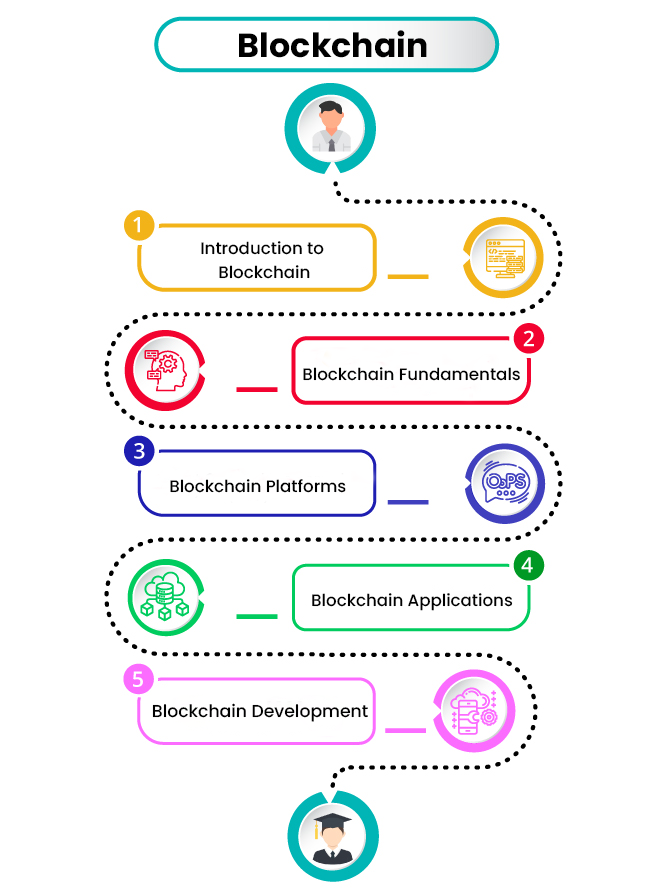
Curriculum in Blockchain

Introduction To Blockchain And Cryptocurrencies
  • History
  • Bitcoin or bitcoin (Do you know the difference)?
  • CentralizedLedgers
  • Decentralized Ledgers
  • Functions of currency
  • Distributed consensus
  • Consensus Mechanisms ex. POW, POS, DBTF (delegated Byzantine Fault Tolerance) etc.
  • Financial use cases
  • Non-Financial use cases
  • Price Derivation of Bitcoin and other Altcoins
  • Demo and Excercise
  • 1st Generation Of Blockchain
  • Hash functions ex. SHA256
  • Bitcoin Improvement Protocol ex. BIP 32
  • Merkel root
  • Address
  • Symmetric and Asymmetric Encryption
  • Digital signatures
  • Bitcoin Dictionary
  • Demo of Features
  • Lab session and Excercise
  • 2nd Generation Of Blockchain
  • Transactions
  • Blockchain Ledger
  • Demo of Blockchain
  • Bitcoin units
  • The network
  • Bitcoin Improvement Proposals (BIPS)
  • Community
  • Demo
  • 3rd Generation Of Blockchain
  • Blockchain explorers
  • UXTOS
  • Bitcoin Mining
  • Algorithm
  • Mining pools
  • Hardware Wallets
  • Security and centralization
  • Lab session and Excercise
  • Future Trends In Blockchain
  • Wallet types
  • Bitcoin Clients
  • Deterministic wallets
  • Backups
  • Demo of Wallets ex.
  • Lab session and Exercise: Set up your Wallet
  • Bitcoins
  • Trade Bitcoins
  • Buy and sell Bitcoins
  • Invest
  • Hedging
  • Introduction to Altcoins ex. NEO
  • Lab session and Excercise
  • Excerises
  • Lab session and Excercise
  • Reality about Blockchain and How Blockchain works?
  • Blockchain Architecture and Platforms ex. BigChainDB, Corda, Ethereum etc.
  • DTL- Distributed ledger
  • Consensus Mechanisms ex. POW, POS, DBTF (delegated Byzantine Fault Tolerance) etc.
  • Real demo of Blockchain with a simple example
  • Distributed VS Decentralized network
  • Private and Public Blockchain
  • Consortium Blockchain
  • Permissioned and Permissionless Blockchain
  • Public and Private Key creation
  • Storing Private and Public key
  • Mining
  • Genesis Block in Blockchain
  • Hard fork
  • Consensus Mechanism
  • 51% Attack theory
  • Exercise: Set up your Private Blockchain
  • Exercise: Blockchain use cases for Banking, Insurance etc.
  • Extra: How to design Blockchain Architecture, Blockchain use cases, Requirements Analysis etc.
  • Blockchain Architecture
  • Design the admins and user Interfaces of Blockchain. Examples Demonstration with HTML5, CSS, Solidity
  • Blockchain Architecture and Platforms ex. BigChainDB, Corda, Ethereum etc.
  • Introduction To Ethereum
  • Introduction to Ethereum
  • Basics of Ethereum
  • Introduction to Web 3 and Truffle
  • Introduction to smart contract
  • Components of smart contract
  • Exercise: Create and deploy Smart contract
  • Ethereum tools ex. Mist, Dapps and accounts
  • Ethereum Test Rpc
  • Introduction to solidity programming
  • Structure of Solidity contract
  • DApps and DAOs
  • Lab session and Excercise
  • Blockchain Platforms
  • Introduction to Blockchain platforms ex. Multi chain
  • Blockchain as a service (BAAS) on Microsoft Azure
  • Blockchain on AWS (Amazon web services)
  • Blockchain on IBM Bluemix
  • Exercise: How to set up Private Blockchain on Multichain
  • Exercise: How to set up Private Blockchain on Amazon Web services
  • Blockchain Applications
  • Blockchain Ripple Framework
  • How to create Blockchain for real projects ex. KYC, Travel Insurance etc.
  • Blockchain API
  • Blockchain waves platform
  • Introduction to Monero
  • Introduction to next generation platform- IOTA
  • Introduction to IOTA and Tangle Architecture
  • Blockchain and Artificial Intelligence
  • Blockchain and Internet of Things
  • Exercise: How to Create AI Chatbot and deploy on Blockchain
  • Introduction To ICO
  • Exercise: How to Create AI Chatbot and deploy on Blockchain
  • How ICO is a new way of raising money
  • ICO regulations
  • How to issue your own ICO token?
  • How to launch an ICO platform?
  • ICO Strategic and Marketing techniques
  • Exercise: ICO
  • Curriculum in Blockchain

    Blockchain Is Preferred by Over 35% of Developers. Blockchain is the most widely used and in-demand programming language in the IT industry.

    • History
    • Bitcoin or bitcoin (Do you know the difference)?
    • CentralizedLedgers
    • Decentralized Ledgers
    • Functions of currency
    • Distributed consensus
    • Consensus Mechanisms ex. POW, POS, DBTF (delegated Byzantine Fault Tolerance) etc.
    • Financial use cases
    • Non-Financial use cases
    • Price Derivation of Bitcoin and other Altcoins
    • Demo and Excercise
    • Hash functions ex. SHA256
    • Bitcoin Improvement Protocol ex. BIP 32
    • Merkel root
    • Address
    • Symmetric and Asymmetric Encryption
    • Digital signatures
    • Bitcoin Dictionary
    • Demo of Features
    • Lab session and Excercise
    • Transactions
    • Blockchain Ledger
    • Demo of Blockchain
    • Bitcoin units
    • The network
    • Bitcoin Improvement Proposals (BIPS)
    • Community
    • Demo
    • Blockchain explorers
    • UXTOS
    • Bitcoin Mining
    • Algorithm
    • Mining pools
    • Hardware Wallets
    • Security and centralization
    • Lab session and Excercise
    • Wallet types
    • Bitcoin Clients
    • Deterministic wallets
    • Backups
    • Demo of Wallets ex.
    • Lab session and Exercise: Set up your Wallet
    • Trade Bitcoins
    • Buy and sell Bitcoins
    • Invest
    • Hedging
    • Introduction to Altcoins ex. NEO
    • Lab session and Excercise
    • Lab session and Excercise
    • Reality about Blockchain and How Blockchain works?
    • Blockchain Architecture and Platforms ex. BigChainDB, Corda, Ethereum etc.
    • DTL- Distributed ledger
    • Consensus Mechanisms ex. POW, POS, DBTF (delegated Byzantine Fault Tolerance) etc.
    • Real demo of Blockchain with a simple example
    • Distributed VS Decentralized network
    • Private and Public Blockchain
    • Consortium Blockchain
    • Permissioned and Permissionless Blockchain
    • Public and Private Key creation
    • Storing Private and Public key
    • Mining
    • Genesis Block in Blockchain
    • Hard fork
    • Consensus Mechanism
    • 51% Attack theory
    • Exercise: Set up your Private Blockchain
    • Exercise: Blockchain use cases for Banking, Insurance etc.
    • Extra: How to design Blockchain Architecture, Blockchain use cases, Requirements Analysis etc.
    • Design the admins and user Interfaces of Blockchain. Examples Demonstration with HTML5, CSS, Solidity
    • Blockchain Architecture and Platforms ex. BigChainDB, Corda, Ethereum etc.
    • Introduction to Ethereum
    • Basics of Ethereum
    • Introduction to Web 3 and Truffle
    • Introduction to smart contract
    • Components of smart contract
    • Exercise: Create and deploy Smart contract
    • Ethereum tools ex. Mist, Dapps and accounts
    • Ethereum Test Rpc
    • Introduction to solidity programming
    • Structure of Solidity contract
    • DApps and DAOs
    • Lab session and Excercise
    • Introduction to Blockchain platforms ex. Multi chain
    • Blockchain as a service (BAAS) on Microsoft Azure
    • Blockchain on AWS (Amazon web services)
    • Blockchain on IBM Bluemix
    • Exercise: How to set up Private Blockchain on Multichain
    • Exercise: How to set up Private Blockchain on Amazon Web services
    • Blockchain Ripple Framework
    • How to create Blockchain for real projects ex. KYC, Travel Insurance etc.
    • Blockchain API
    • Blockchain waves platform
    • Introduction to Monero
    • Introduction to next generation platform- IOTA
    • Introduction to IOTA and Tangle Architecture
    • Blockchain and Artificial Intelligence
    • Blockchain and Internet of Things
    • Exercise: How to Create AI Chatbot and deploy on Blockchain
    • Exercise: How to Create AI Chatbot and deploy on Blockchain
    • How ICO is a new way of raising money
    • ICO regulations
    • How to issue your own ICO token?
    • How to launch an ICO platform?
    • ICO Strategic and Marketing techniques
    • Exercise: ICO

    Blockchain Training Projects

    Develop Your Blockchain Skills With Useful and Interesting Projects.


    Token Creation

    Create your own token on an existing blockchain platform like Ethereum using smart contracts.


    Decentralized Voting Application

    Build a basic decentralized voting application where users can cast votes that are recorded on the blockchain.


    Supply Chain Tracking

    Develop a simple supply chain tracking system where users can trace the origin and journey of products using blockchain technology.


    Multi-Signature Wallet

    Implement a multi-signature wallet that requires multiple signatures to authorize transactions, adding an extra layer of security.


    Decentralized Social Network

    Build a decentralized social networking platform where users have full control over their data and interactions using blockchain technology.


    Election Voting System

    Create a secure and transparent election voting system using blockchain technology to prevent fraud and ensure the integrity of the voting process.


    Scalable Blockchain Solution

    Create a scalable blockchain solution that can handle high transaction throughput without sacrificing decentralization or security.


    Cross-Chain Atomic Swaps

    Implement atomic swap functionality to enable trustless and decentralized exchange of assets across different blockchain networks.


    Blockchain Oracles

    Implement a system for connecting smart contracts with real-world data sources (oracles) securely and efficiently.

    Key Highlights

    Our Instructor

    Get advice from specialists who have certifications and are currently working.

    Blockchain Training Overview

    Blockchain is a revolutionary technology that serves as a decentralized and immutable ledger, enabling secure and transparent transactions without the need for intermediaries. At its core, a blockchain is a distributed database maintained by a network of computers (nodes) where each block contains a timestamped batch of transactions, cryptographically linked to the previous block, forming a chain. This structure ensures that once recorded, data cannot be altered retroactively without altering subsequent blocks, providing an unparalleled level of security and trust. Blockchain technology has found applications across various industries, from finance and supply chain to healthcare and government, due to its ability to foster trust, enhance transparency, streamline processes, and mitigate fraud. With its potential to revolutionize countless sectors by enabling peer-to-peer transactions and disintermediation, blockchain continues to evolve and reshape the future of digital interactions and data management.

    Additional Information

    Blockchain Programmer’s Potential Career Paths

    Blockchain programmers have a wide range of potential career paths due to the versatile nature of blockchain technology and its applications across various industries. Some of the common career paths for blockchain programmers include:

    • Blockchain developers design, develop, and implement blockchain solutions, including smart contracts, decentralized applications (DApps), and custom blockchain protocols. They are proficient in programming languages such as Solidity, Java, Python, or C++, and have expertise in blockchain platforms like Ethereum, Hyperledger, or EOS.
    • Smart contract developers specialize in writing and deploying smart contracts on blockchain platforms. They ensure the security, functionality, and efficiency of smart contract code, typically using languages like Solidity for Ethereum-based contracts or Chaincode for Hyperledger Fabric.
    • Cryptocurrency developers focus on creating and maintaining cryptocurrency protocols, wallets, and exchanges. They are skilled in blockchain technologies, cryptography, and cybersecurity, and they develop innovative solutions to improve the scalability, privacy, and usability of digital currencies.
    • Blockchain architects design and oversee the architecture of blockchain systems, including network infrastructure, consensus mechanisms, and data storage protocols. They collaborate with developers, engineers, and stakeholders to create scalable, secure, and interoperable blockchain solutions tailored to specific use cases.

    What Are the Requirements for an Blockchain Training Course?

    The requirements for a blockchain training course can vary depending on the level and focus of the course, as well as the institution offering it. However, here are some common requirements you might encounter for enrolling in a blockchain training course:

    • Most blockchain training courses assume a basic level of computer literacy, including familiarity with operating systems, web browsers, and common software applications.
    • Many blockchain courses require some programming experience, particularly in languages commonly used in blockchain development such as JavaScript, Python, Java, C++, or Solidity.
    • A strong foundation in data structures and algorithms is often necessary for understanding the underlying principles of blockchain technology and its implementation.
    • Since cryptography plays a crucial role in blockchain security and consensus mechanisms, a basic understanding of cryptographic principles such as encryption, hashing, digital signatures, and key management may be required.

    Reasons to Consider Enrolling in Blockchain Training

    Enrolling in blockchain training can offer numerous benefits and opportunities for individuals across various backgrounds and industries. Here are several compelling reasons to consider pursuing blockchain training:

    • Blockchain is a rapidly evolving and disruptive technology with vast potential to transform industries such as finance, supply chain, healthcare, and more. By gaining expertise in blockchain through training, individuals can position themselves at the forefront of innovation and capitalize on emerging career opportunities.
    • There is a growing demand for professionals with blockchain skills as businesses and organizations increasingly explore blockchain solutions for enhancing efficiency, security, and transparency. Enrolling in blockchain training can help individuals meet this demand and enhance their career prospects.
    • Blockchain offers a wide range of career opportunities, including blockchain development, smart contract engineering, cryptocurrency analysis, blockchain consulting, and more. Training in blockchain equips individuals with the knowledge and skills needed to pursue diverse and rewarding career paths in the digital economy.
    • In today's competitive job market, having specialized skills in emerging technologies like blockchain can set individuals apart from their peers. Blockchain training demonstrates initiative, adaptability, and a commitment to continuous learning, making candidates more attractive to employers seeking top talent.

    Techniques and Trends in Blockchain Development

    Blockchain development is a rapidly evolving field with various techniques and trends shaping its landscape. Here are some key techniques and trends in blockchain development:

    • DeFi refers to a set of financial services and applications built on blockchain technology, offering decentralized alternatives to traditional financial intermediaries. DeFi applications include decentralized exchanges (DEXs), lending platforms, yield farming protocols, and asset management tools, enabling users to access financial services without relying on banks or financial institutions.
    • NFTs are unique digital assets that represent ownership or proof of authenticity of digital or physical items on blockchain platforms. NFTs have gained popularity in digital art, collectibles, gaming, and other creative industries, enabling creators to tokenize and monetize their work while providing collectors with verifiable ownership.
    • Interoperability solutions aim to facilitate communication and data exchange between different blockchain networks and platforms. Projects such as Polkadot, Cosmos, and interoperability protocols like Interledger Protocol (ILP) and Atomic Cross-Chain Transfers (ACCTs) are working to bridge the gap between disparate blockchain ecosystems, enabling seamless interoperability and collaboration.
    Show More

    Enter details. Get MNC calls!

    Blockchain Training Objectives

  • Basic understanding of computer science and programming concepts
  • Familiarity with blockchain fundamentals and principles
  • Knowledge of cryptography and cryptographic techniques
  • Experience with blockchain platforms, tools, and programming languages (e.g., Solidity, JavaScript)
  • Completion of training courses or preparation materials recommended by the certification provider
  • Passing the certification exam with a specified passing score
  • While obtaining a blockchain certification can enhance your qualifications and increase your chances of employment in the blockchain industry, it does not guarantee employment on its own. Employers typically consider a combination of factors, including your skills, experience, educational background, and certification, when making hiring decisions. However, earning a blockchain certification can demonstrate your commitment to learning and staying updated with industry trends, which can be advantageous during the job application process.

    Yes, you can pursue multiple blockchain course certifications to expand your knowledge and skills in different areas of blockchain technology. Pursuing multiple certifications allows you to gain expertise in various blockchain platforms, tools, and applications, which can increase your versatility and competitiveness in the job market. However, it's essential to ensure that you have the time and resources to dedicate to each certification program effectively.

  • Certified Blockchain Developer (CBD)
  • Certified Blockchain Architect (CBA)
  • Certified Blockchain Security Professional (CBSP)
  • Certified Blockchain Business Professional (CBBP)
  • Certified Ethereum Developer (CED)
  • Certified Hyperledger Fabric Administrator (CHFA)
  • Certified Corda Developer (CCD)
  • Certified Solidity Developer (CSD)
  • Validation of skills and knowledge in blockchain technology.
  • Increased opportunities for career advancement and higher-paying roles.
  • Access to networking opportunities and industry events.
  • Recognition by employers and organizations seeking blockchain talent.
  • For beginners in blockchain technology, a foundational certification such as "Certified Blockchain Developer" or "Certified Blockchain Business Professional" may be suitable. These certifications typically cover essential concepts, principles, and practical skills required to understand blockchain technology, develop blockchain applications, or explore business applications of blockchain. Additionally, introductory courses or certifications offered by reputable organizations or educational institutions can provide a solid foundation for beginners entering the blockchain industry.

    Show More

    Industry Statistics

    Jobs / Month

    248

    Avg. Salary

    ₹ 12,55,200

    Job Roles

    Blockchain Developer

    Blockchain Engineer

    Smart Contract Developer

    Blockchain Architect

    Blockchain Certification

    Certificate
    GET A SAMPLE CERTIFICATE
  • Demonstrates expertise and proficiency in blockchain technology.
  • Enhances credibility and marketability to potential employers.
  • Opens up opportunities for career advancement and higher salaries.
  • Validates knowledge and skills in a rapidly growing field.
  • Provides networking opportunities within the blockchain industry.
  • Yes, there are various categories of Blockchain certifications offered, catering to different roles and levels of expertise. Some common categories include blockchain developer certifications, blockchain architect certifications, blockchain consultant certifications, and more.

    While having a Blockchain certification significantly improves job prospects, it does not guarantee job placement. However, it enhances your marketability and competitiveness in the job market by demonstrating specialized knowledge and skills in blockchain technology.

    Yes, it is permissible to pursue multiple Blockchain course certifications to broaden your knowledge and skill set in different areas of blockchain technology. This can enhance your versatility and attractiveness to potential employers.

    With a Blockchain certification, you can pursue various career paths, including roles such as blockchain developer, blockchain consultant, blockchain project manager, smart contract developer, blockchain analyst, and more. Industries such as finance, supply chain, healthcare, government, and technology sectors actively seek professionals with blockchain expertise.

    Some certification providers may offer the option to complete the Blockchain certification exam remotely, but this depends on the organization's policies and exam delivery methods. Candidates should check with the certifying body for specific details and requirements.

    Real-world experience is not always a strict requirement for obtaining a Blockchain certification. However, practical experience can enhance understanding and application of blockchain concepts, making the certification more valuable. Some certifications may include practical components or require candidates to demonstrate hands-on skills.

    The justification for investing time and finances in acquiring an ACTE Blockchain Certification depends on factors such as the reputation of the certification, its recognition in the industry, the quality of the curriculum, and alignment with your career goals. Researching the certification program, its market demand, and potential career prospects can help determine if it's a worthwhile investment.

    Show More

    The Preferred Partner for 100+ Organizations' Hiring

    Learn from the certified and real time working professionals.

    • Over 100 firms that are looking for top talent for their open positions have come to rely on ACTE as their go-to partner.

    • Businesses have confidence in our ability to match them with the best individuals because of our considerable expertise and proven track record of success.

    • In this section, we'll examine the primary elements influencing this trust and examine how our constant commitment to excellence regularly results in remarkable results for our clients.

    Corporate Clients

    Blockchain Course Duration and Fees

    Level Course Duration Fees Structure
    Basic 1 - 1.5 Months ₹7,000 - ₹9,000
    Advanced 1.5 - 2 Months ₹7,000 - ₹10,000

    Job Opportunities in Blockchain

    Blockchain is preferred by more than 35% of developers. The most widely used and in-demand programming language in the tech industry is Blockchain.

    Salary In Blockchain
    Reach Our Placement Officer

    You can Work as a

    Blockchain AnalystCryptocurrency TraderBlockchain ResearcherQuality Assurance EngineerBlockchain Marketing ManagerBlockchain Legal ConsultantBlockchain Project Manager

    Upcoming In-Demand Jobs

    Blockchain Compliance AnalystBlockchain UI/UX DesignerBlockchain Security EngineerCryptocurrency AnalystBlockchain Auditor

    Student Testimonials

    100% Placement

    7000+ Placed Student

    600+ Hiring Partners

    5.5 LPA Average Salary

    Recently Placed Students

    Blockchain Training FAQ's

    Boost Your Coding Ability: Essential Blockchain Training for Novices and Experienced

    Blockchain training is an educational program designed to teach individuals about blockchain technology, including its fundamentals, applications, and practical skills. It is important because blockchain is a revolutionary technology that has the potential to disrupt various industries by providing secure, transparent, and decentralized solutions for transactions, data management, and more.

    The need for prior programming experience in blockchain training can vary depending on the level and focus of the course. While some introductory courses assume no prior programming knowledge and start from basics, more advanced courses may require familiarity with programming languages such as JavaScript, Python, or Solidity, especially if they involve smart contract development or decentralized application (DApp) creation. However, many blockchain training programs cater to individuals with diverse backgrounds and skill levels, offering beginner-friendly content alongside more advanced topics.

  • Blockchain fundamentals
  • Smart contracts and DApps
  • Use cases and applications
  • Security and privacy
  • Enterprise blockchain solutions
  • The typical length of a blockchain training course can vary depending on factors such as the depth of coverage, the level of the course (introductory, intermediate, advanced), and the format of delivery (online, in-person, self-paced). Introductory courses may range from a few days to a few weeks, while more comprehensive certification programs or specialized courses may span several weeks to several months.

    Requirements for enrolling in a blockchain training course can vary depending on the course provider, level of the course, and intended audience. Generally, there are no strict prerequisites for introductory courses, but familiarity with basic computer skills and concepts may be helpful. For more advanced courses, especially those involving programming, some prior knowledge or experience in programming languages may be required or recommended.

    Many blockchain training programs offer certificates of completion or achievement to participants who successfully finish the course requirements. These certificates validate the individual's knowledge and skills in blockchain technology and may be useful for showcasing qualifications to employers, clients, or professional networks. However, the availability of certification may vary depending on the course provider and the specific program.

    Show More

    Yes, many online blockchain courses offer certificates of completion to participants who successfully finish the course requirements. These certificates validate the individual's knowledge and skills in blockchain technology and may be useful for showcasing qualifications to employers, clients, or professional networks. However, the availability of certification may vary depending on the course provider and the specific program.

  • Complexity of concepts
  • Lack of hands-on experience
  • Keeping up with rapid changes
  • Technical barriers
  • Many online blockchain courses offer opportunities to engage with instructors or pose questions through various channels such as discussion forums, live Q&A sessions, office hours, or email support. Take advantage of these opportunities to seek clarification, ask questions, and interact with instructors and fellow learners.

    Yes, there are specialized online blockchain courses designed for particular career paths such as data science, web development, finance, supply chain management, and more. These courses focus on applying blockchain technology to specific industries or domains and may include relevant topics, case studies, and hands-on projects tailored to the targeted career path.

    Prerequisites for enrolling in online blockchain courses can vary depending on the course provider, level of the course, and intended audience. Generally, there are no strict prerequisites for introductory courses, but familiarity with basic computer skills and concepts may be helpful. For more advanced courses, especially those involving programming, some prior knowledge or experience in programming languages may be required or recommended.

  • Set clear goals
  • Establish a study routine
  • Break it down
  • Stay engaged
  • Reward yourself
  • Show More
  • Setting up blockchain development environments
  • Developing smart contracts and decentralized applications (DApps)
  • Implementing real-world use cases
  • Pre- and post-training assessments
  • Performance metrics
  • Feedback and testimonials
  • Return on investment (ROI) analysis
  • Dedicated instructors or mentors
  • Online resources and materials
  • Community forums or discussion groups
  • Ongoing support
  • Beginners
  • Intermediate
  • Advanced
  • Innovation and differentiation
  • Operational efficiency
  • Talent development and retention
  • Pricing structure
  • Cost-saving opportunities
  • Show More